The 4 Different Types of Blockchain Technology Explained [2024]
The 4 Different Types of Blockchain Technology Explained [2024]
Regardless of your knowledge of the crypto industry, you’ve likely heard about blockchain. However, many people struggle to understand what this actually represents. Furthermore, many people are surprised to hear there are different types of blockchain technology.
Since the development of Bitcoin in 2009, hundreds of new chains have emerged. Each of them was developed to solve a specific type of problem. While Bitcoin was revolutionary, it wasn’t the end-all solution.
If you’re a tech enthusiast looking to learn about different types of blockchain, you’ve come to the right place. On the other hand, software developers and entrepreneurs can also benefit from understanding whether a specific type of blockchain can help them improve their products.
Why Do We Need Multiple Types of Blockchain?
Blockchain is a distributed ledger technology, and one of its main goals is to securely transmit information between nodes. One of the best examples is popular blockchains such as BSC or Bitcoin, where the transmitted information is monetary.
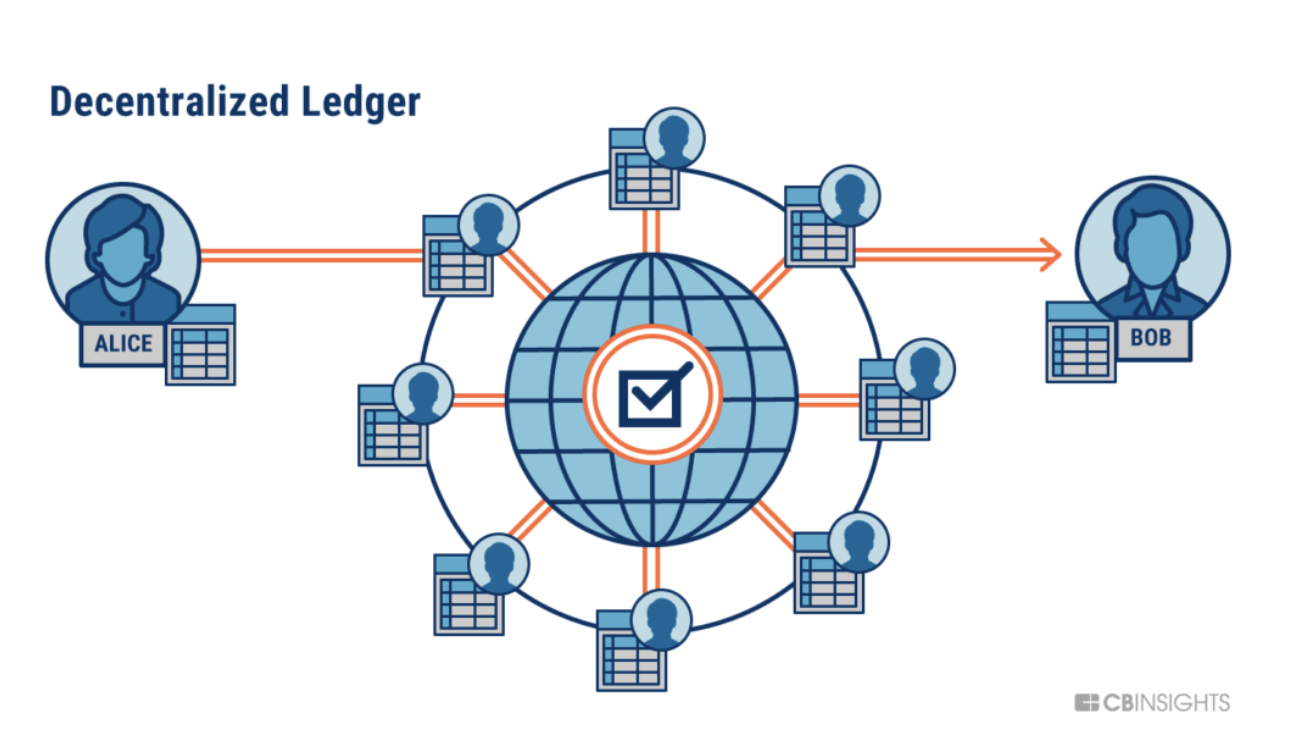 The advantage of blockchain is that it is hard to alter while offering transparency of transactions for everyone on the network. While blockchain has become synonymous with cryptocurrencies, its uses are much larger than that.
While the public blockchain is permissionless, the private blockchain offers access control. This difference is enough to show you why someone would benefit from one rather than the other.
For example, password manager tools can be helpful to both individuals who browse the internet and large enterprises. However, how they’re used differs significantly, solving problems of each of those two groups differently.
While the difference between public and private blockchains is noticeable, hybrid and consortium blockchain types solve other problems. Each of these options applies to specific organizations and networks.
1. Public Blockchain
It’s important to say that the public blockchain is the most universally recognized, thanks to the increasing popularity of crypto. The main problem that financial institutions have is centralization. The term public comes from the fact that everyone can participate and make changes.
The issue of centralization in traditional finance has been resolved by using a peer-to-peer system. The first public blockchain was Bitcoin, which is still the world’s largest and most popular cryptocurrency.
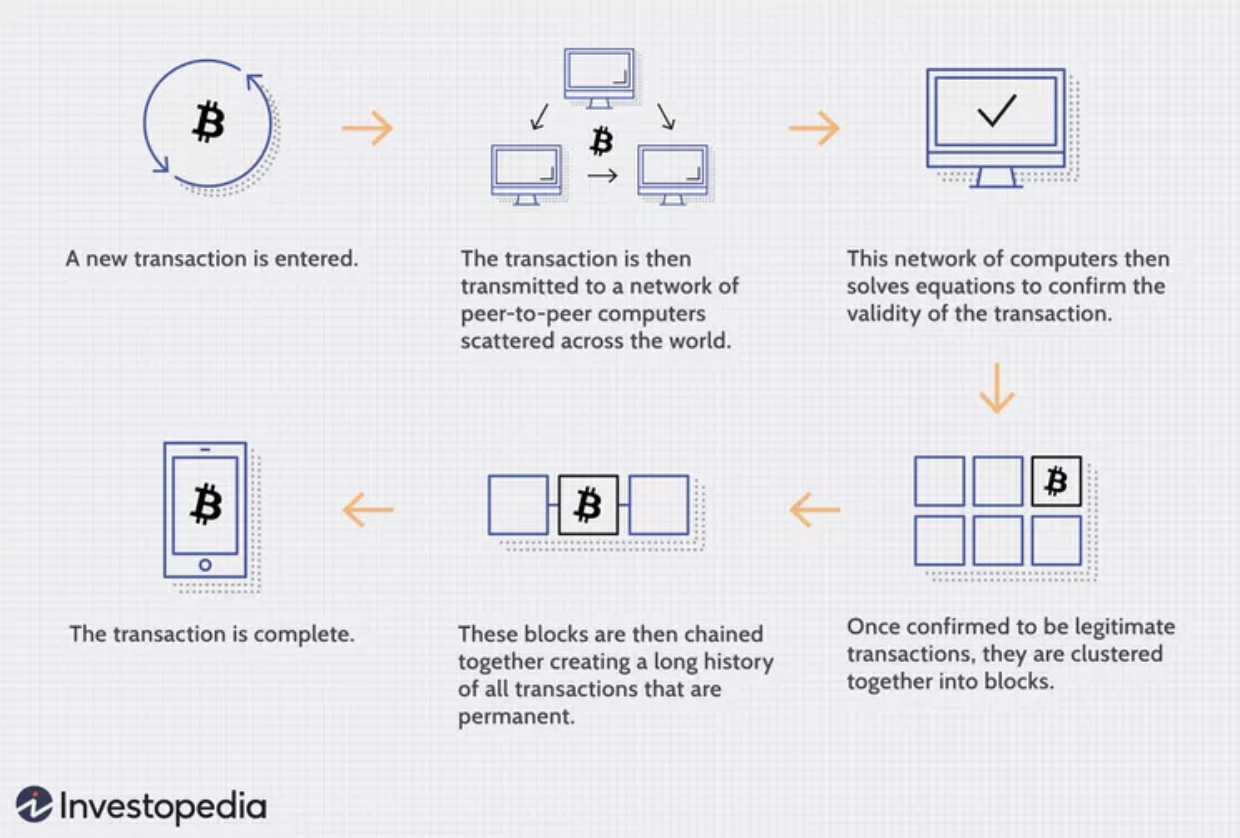
Blockchains are popular in digital currencies and decentralized applications.
Why? Blockchains apply digital ledger technology, ensuring everyone involved in the network must verify all transactions.
There are two ways to execute this verification:
A proof-of-work algorithm
A proof-of-stake algorithm (emerged along with Ethereum)
Public blockchain networks operate independently of organizations. As long as some computation power is invested, it’ll work. You can use them for earning money through mining, which is the process of verifying transactions using computational power.
The downside of this network is that they are performing less efficiently as new nodes join the blockchain. On the other hand, permissionlessness, which is usually a good trait in this context, can lead to some security issues. Furthermore, if malicious individuals get more than 51% of the computational power, they might misuse it to harm the network.
With many nodes and participants, public blockchains also have a significant problem with energy consumption. While proof-of-stake has tried to solve this problem, proof-of-work-based Bitcoin still consumes a lot of energy.
2. Private Blockchain
One of the main reasons blockchain exists is to increase transparency. So, private blockchains sound contradictory. However, it’s important to note that blockchain is still a technology that you can build upon and use in various situations.
Private blockchain networks function in the same way public ones do. They rely on decentralization and peer-to-peer networks for connections. But they operate under a single entity, such as a company or an organization.
Private blockchains are much faster than public ones since fewer nodes are operating in the network (they also consume less energy). Plus, the organization filters and approves nodes that want to join the network, ensuring smoother scaling.
While public blockchains are open-source, and everyone can check the logic behind them, private chains don’t usually offer this. Furthermore, since everyone in the network has to be authorized, it’s unlikely that a private network provides anonymity.
Organizations that use permissioned blockchains usually want to secure certain information from the public. That’s where integrating a Cloud-Native Application Protection Platform (CNAPP) becomes increasingly crucial.
Such a platform leverages blockchain technology’s inherent security and transparency features to safeguard applications across cloud environments. Doing so ensures that as businesses transition to using diverse types of blockchain technologies, their applications remain secure from evolving digital threats.
This seamless integration highlights the importance of adopting advanced security measures in tandem with new technologies to protect against potential vulnerabilities.
3. Hybrid Blockchain
We call a hybrid blockchain a combination of public and private chains. This type of network brings together the benefits of those two blockchains. That way, a part of the blockchain is private, and an organization can control it.

On the other hand, the public part allows anyone to participate. Hybrid blockchain doesn’t often use a public ledger. Instead, it allows transactions to be viewed only per request. Important information about the organization is kept private, while smart contracts allow for specific actions.
An interesting aspect of hybrid blockchain is anonymity. Users are anonymous in the network until they make their first transaction. Hybrid blockchain solves a significant problem with public blockchains: the possibility of a 51% attack.
Although this has never happened in a real-life situation (as of yet), it’s still often referred to as one of the significant vulnerabilities of public blockchains. Another advantage is that hybrid blockchains can usually interact with other chains.
The various advantages of a hybrid blockchain lead to an overly complex system and problems with transitioning to it. However, there are still a few industries that prefer it.
For example, it’s popular for medical records, where users can only interact with certain parts of the network. In the same way, companies that include some sort of listing, such as real-estate companies, can benefit from it.
4. Consortium Blockchain
When observing different types of blockchains, we can see a great example of innovation. While private blockchains were developed to apply the advantages of public blockchains for specific situations, hybrid combined both.
In the same pattern, consortium blockchains, otherwise known as federated blockchains, build upon concepts of hybrid blockchains. While a single entity manages private blockchains, consortium blockchains allow multiple organizations to engage in its operations.
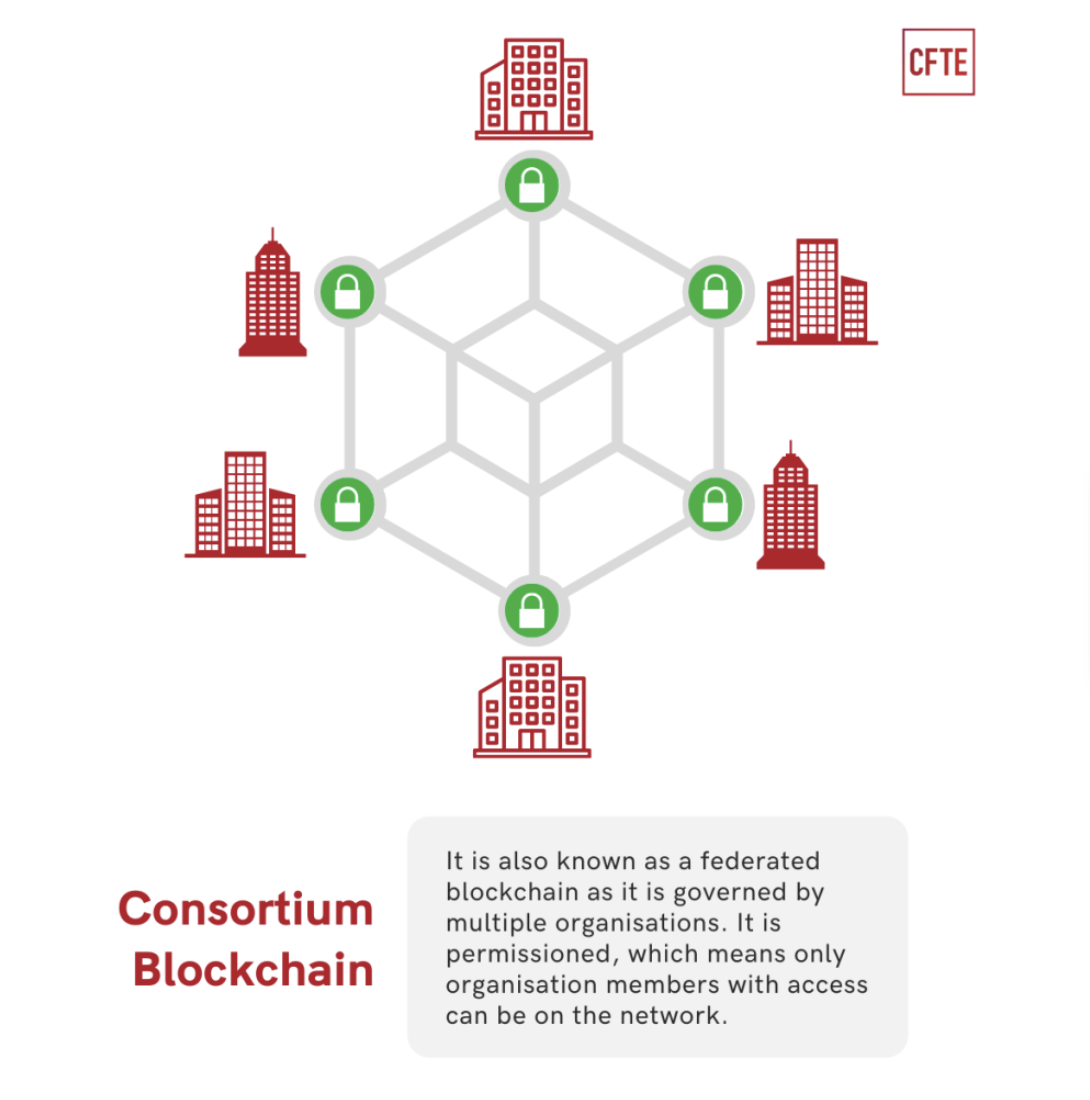
Consortium blockchain networks also lack transparency and are considered centralized. Their characteristics make them useful for banks and financial institutions.
The nodes in this network are predetermined. Multiple banks can form consortiums, allowing them to control nodes and transactions.
Examples of Each Blockchain Type
Most individuals’ first experience with blockchain will usually be through cryptocurrencies.
Public blockchains are the most widespread, and cryptocurrencies such as Bitcoin, Ethereum, Cardano, and others that come to your mind are on a public network. What’s different between cryptocurrencies are their consensus algorithms and various utilities.
Private blockchains are often enterprise-level, and thus, the average individual won’t come in touch with them often. A company developing various tools and software for enterprise-level clients is Hyperledger. This company is related to the Linux Foundation, and many large corporations have contributed to it.
Hyperledger Fabric is one example of an infrastructure used to develop private blockchains. Hyperledger’s competitors include Quorum and Corda.
Regarding hybrid blockchains, Komodo is one of the companies that aims to make this possible. This chain applies a Delayed Proof of Work (dPoW), which combines some of the advantages of Bitcoin’s chain and Komodo’s proof of stake.
Another example of a hybrid blockchain is a company called XinFin, which uses Ethereum for public transactions and ledgers and Quorum for the private aspect.
Ripple is considered a consortium chain. This is one of the most popular cryptocurrencies, and some notable organizations, such as American Express.
All Blockchain Types Have Their Pros and Cons
Each type of blockchain solves a unique pain point.
However, it’s important to understand that each comes with a set of disadvantages. As a trader or a crypto enthusiast, learning about blockchain can help you improve your understanding of the market and cryptocurrencies.
Conducting thorough research is crucial when creating a product and seeking a blockchain-based solution. Purely understanding the types of blockchain isn’t enough.
Make an effort to search for comprehensive case studies and prior implementations of each category, and determine which ones can offer valuable assistance in your upcoming pursuits.