Why does mining profitability change?
As we know from the past, mining profitability can change rapidly. One day we can see profits skyrocketing and in just a couple of days, the same GPU can barely cover its electricity costs.
In this guide, we are going to explain why this happens and how you are affected by it when mining (selling hash power) at NiceHash.
Before proceeding, we strongly recommend learning about how NiceHash works by watching this short video.
Why does mining profitability increase or decrease?
There are 3 main reasons why profitability increases or decreases:
- The price of cryptocurrency increases or decreases
- The difficulty increases or decreases
- The transaction fees are increased or decreased
It is important that you understand how mining works in the first place. You can read about how mining works here.

The price of cryptocurrency increases or decreases
This is self-explanatory. If the price of Ethereum (or any other minable coin) goes up, the profits will go up too. If the price of the coin goes down, so do the profits. Of course, this only stands true if the difficulty and block rewards stay the same.
The difficulty increases or decreases
Opposite of the above reason, when difficulty rises and the price stays the same, the mining profits drop or vice versa.
The difficulty is responsible for regulating the number of blocks that are found in the given timeframe. Bitcoin, for example, strives to find a block every 10 minutes. If the block is found every 8 minutes, the difficulty will increase until the block will be found every 10 minutes.
If the difficulty doubles, the miner will only receive half of the crypto earnings (not FIAT) than before.
As seen in the graph below, the difficulty is constantly rising as more and more miners are joining the Ethereum blockchain. Luckily, the price of Ethereum was rising also faster than difficulty thus the profitability increased.
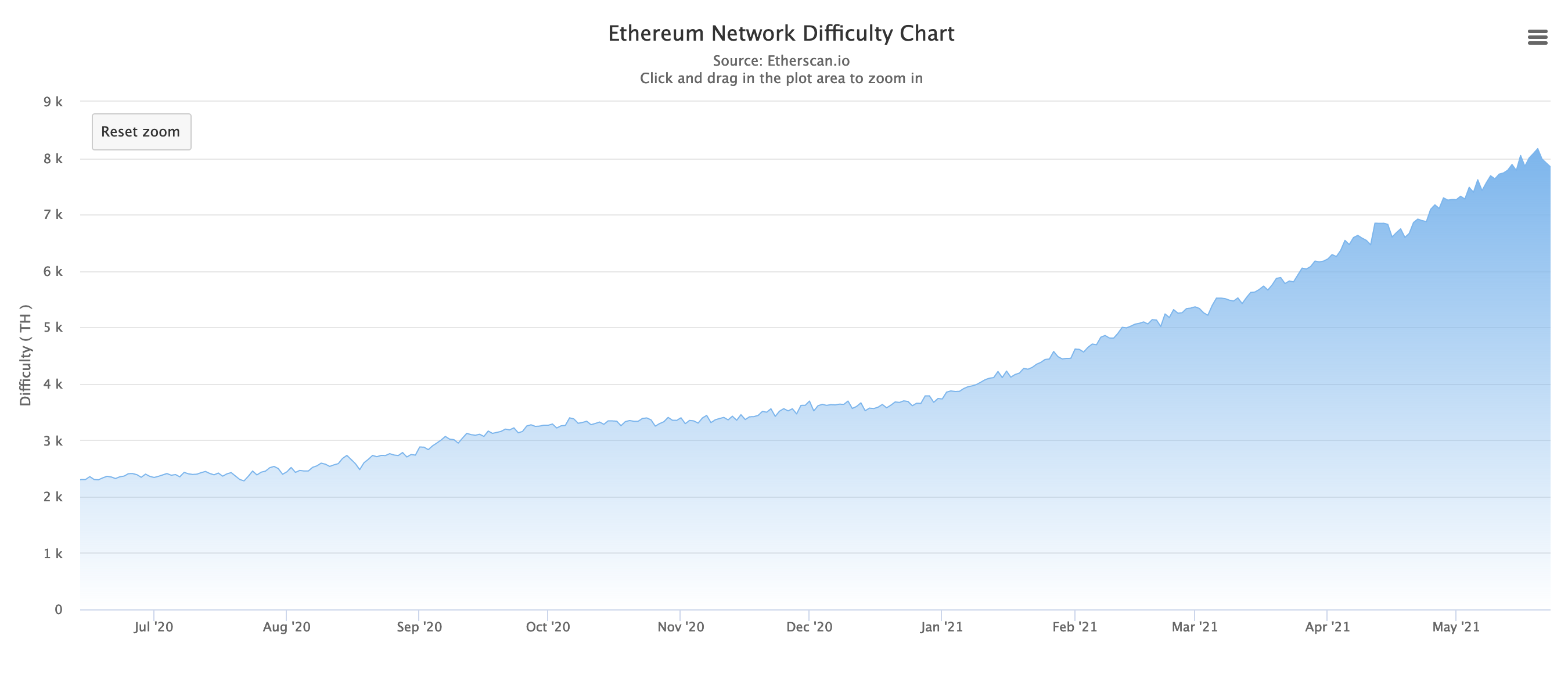
Source: etherscan.io
The transaction fees are increased or decreased
Mining block reward consists of the fixed block reward + transaction fees. This means that a miner, who finds a block will receive a fixed block reward (2 ETH for Ethereum blockchain) + all the transaction fees paid by the users of the blockchain (all ETH and ERC20 transactions for example).
This one is one of the reasons for the sudden huge increase in profitability as we saw on the 12th and 13th of May 2021 when DaggerHashimoto (Ethereum) mining profitability was through the roof. Users of the Ethereum blockchain started to send a lot of transactions on the Ethereum blockchain. Ethereum transactions cost a certain amount of fees, which are then included in the miner block reward.
For example, Ethereum block #12421088 had a fixed reward of 2 ETH and additional 8 ETH of transaction fees included in the block reward.
As seen in the graph below, the transaction fees spiked in May 2021.
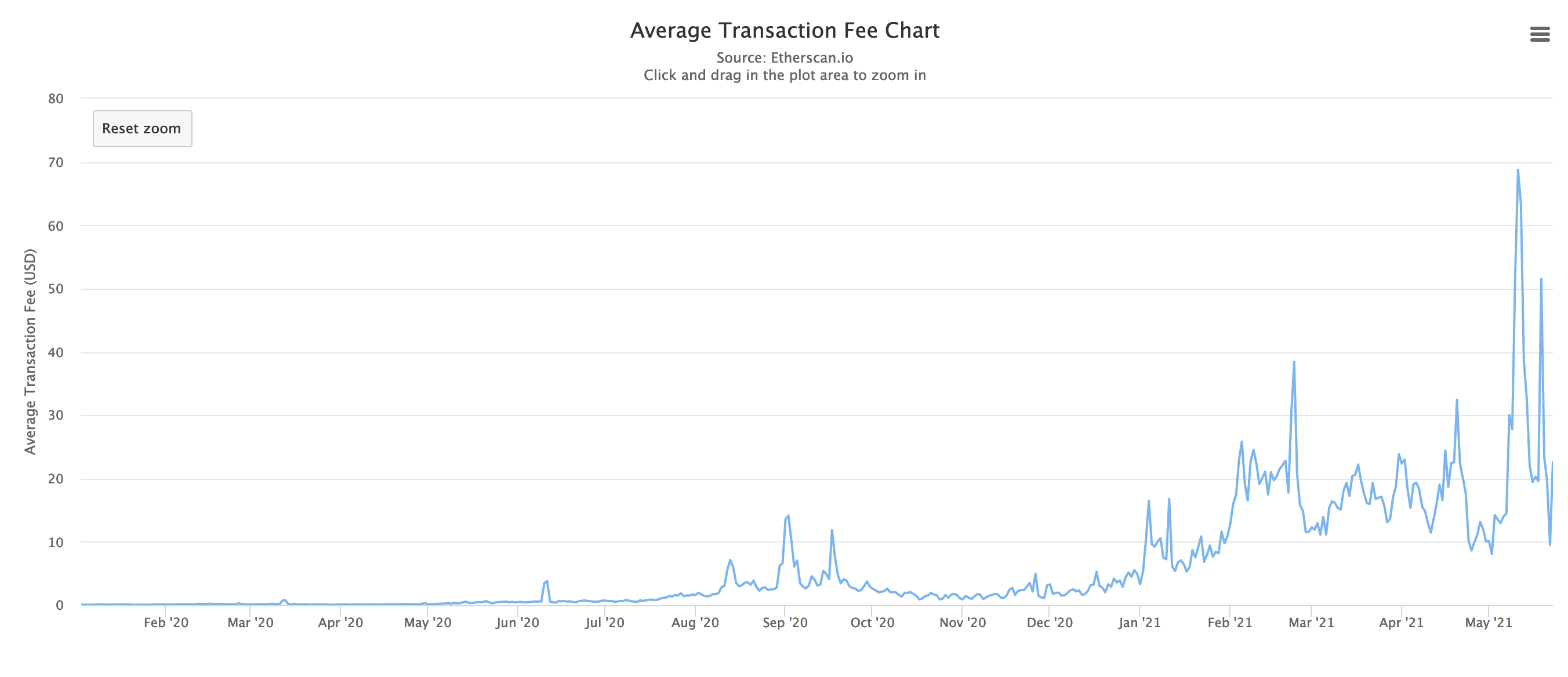
Source: etherscan.io
Profitability change when mining with NiceHash
There is one additional parameter when mining with NiceHash. At NiceHash you are selling your computer power to the highest bidder. Buyers always compete against each other on the open marketplace.

Sometimes a buyer decides to buy more hashing power for his personal needs, like starting his own pool or trying his luck with solo mining. This means that the buyer needs to buy more hashing power, and he will be willing to pay even more than the break-even price.
How much are buyers paying for hashing power?
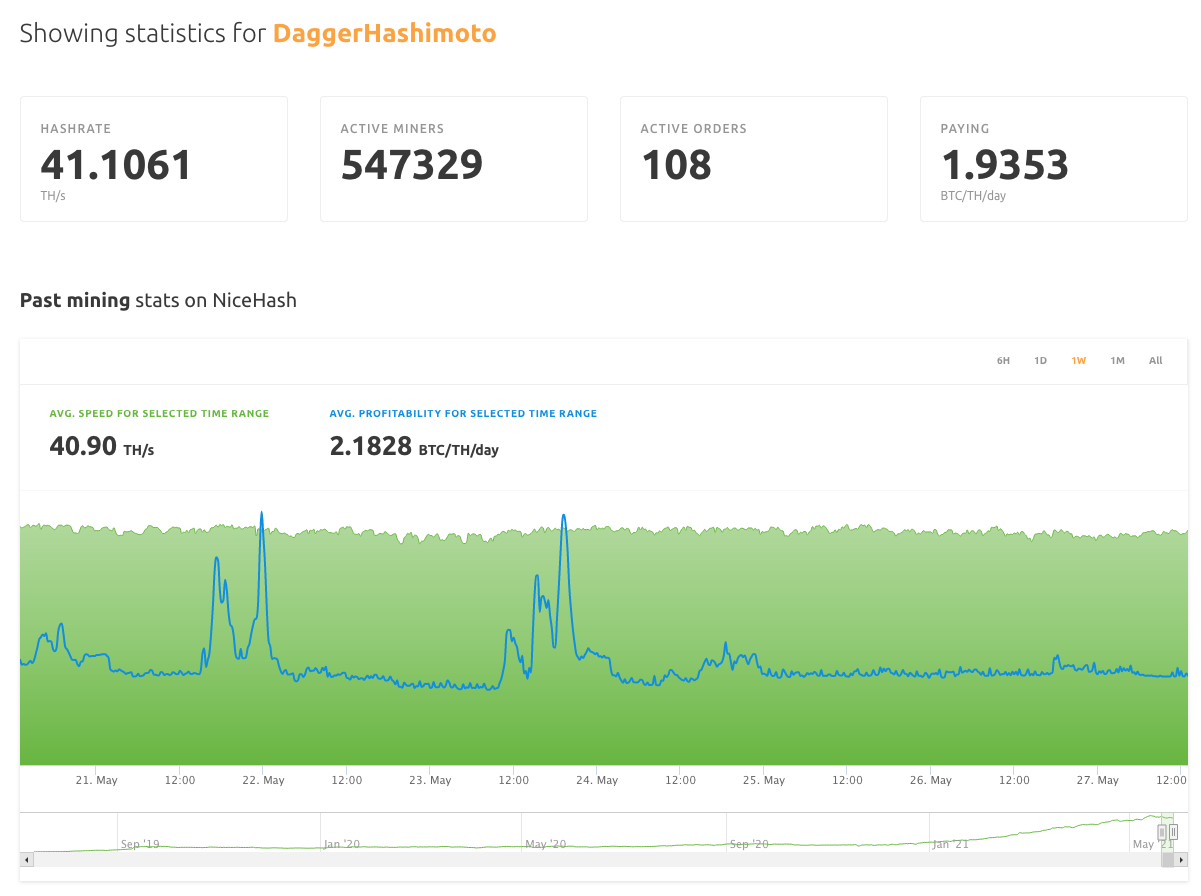
You can check how much buyers pay for hash power on algorithms page. Set the graph view to 1 week and inspect the blue line. This is the average price that the buyers are paying for hashing power. As seen on the picture below, there were two profitability spikes on the 21st and 23rd of May.