Why Bitcoin Miners Earn More on NiceHash Right Now
For Bitcoin miners, profitability ultimately comes down to one key metric: how much you earn per unit of hashrate. Even small differences in payrate can translate into meaningful gains - especially for large-scale operations running hundreds or thousands of ASICs.
Right now, SHA256 miners connected to NiceHash are earning nearly 3% more than the Bitcoin hashprice benchmark, thanks to real-time marketplace demand.
But why does this happen? And how is NiceHash different from traditional mining pools?
Let’s break it down.
Mining Pools vs. Hashrate Marketplaces
Most Bitcoin miners are familiar with FPPS (Full Pay Per Share) pools. These pools aim to provide predictable payouts by calculating a fixed value for each submitted share.
This value is typically based on:
- The current block subsidy
- Average transaction fees
- Network difficulty
- The Bitcoin price
FPPS pools then apply their own internal models and fees to determine how much miners receive per share.
While this approach provides stable earnings, it also means miners are usually paid based on an estimated average, rather than the actual real-time value of hashrate.
NiceHash: A Different Model
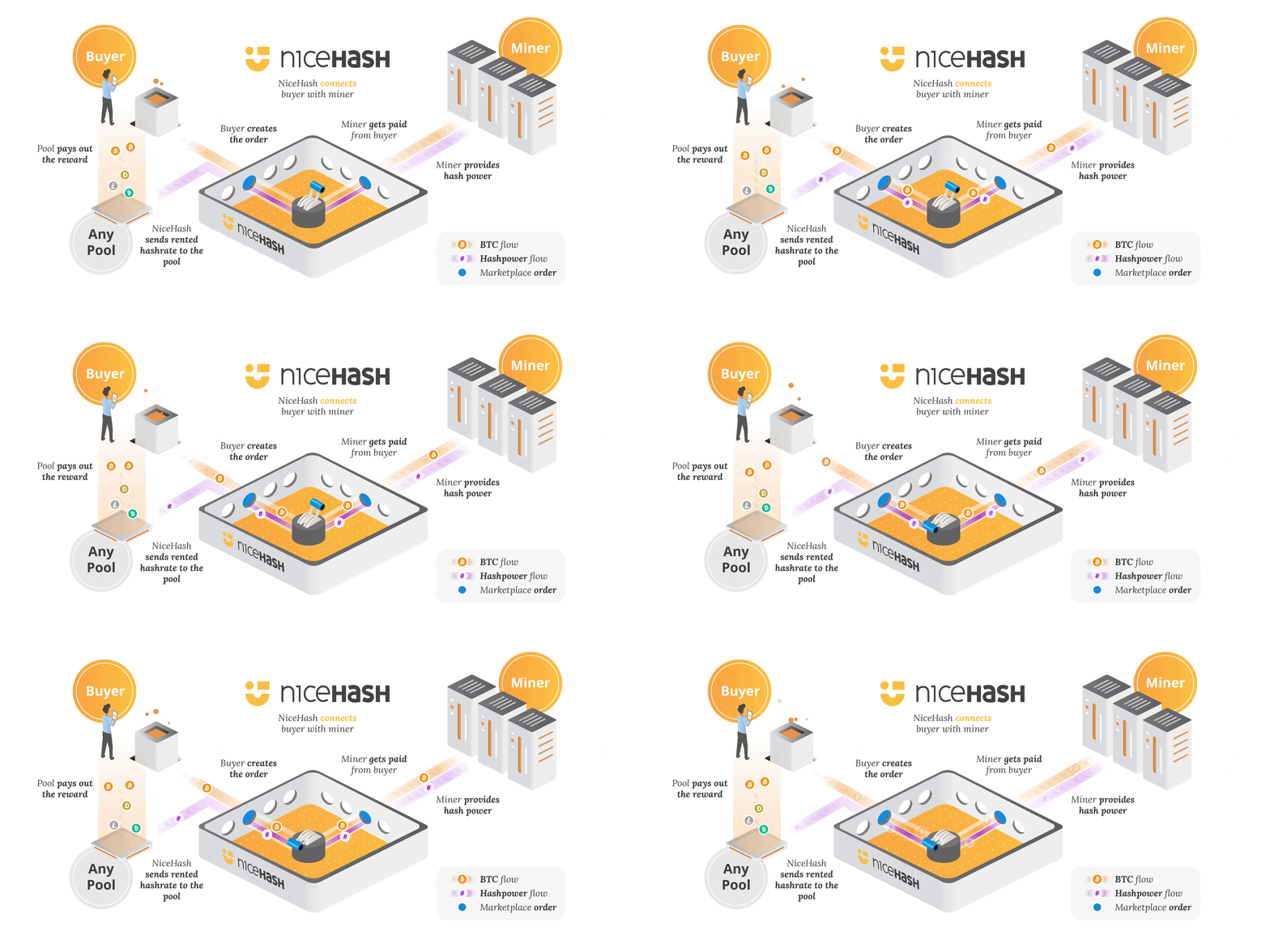
NiceHash operates differently. Instead of being a traditional mining pool, NiceHash is a global marketplace for hashrate.
Miners connect their hardware to NiceHash and sell their hashrate to buyers who need it. These buyers compete in real time by placing bids for available SHA256 hashrate.
This creates a market-driven pricing system.
When demand increases, buyers must raise their bids to secure the hashrate they need. As a result, the price paid to miners automatically increases as well.
In other words, NiceHash miners earn the real-time market value of their hashpower.
Why NiceHash Payrates Can Be Higher
Because NiceHash is demand-driven, buyers are often willing to pay more than the theoretical FPPS rate.
There are several reasons for this:
1. On-demand hashrate
Large buyers may need immediate access to massive amounts of hashrate. Rather than deploying new hardware, they can simply purchase it through NiceHash.
2. Solo mining strategies
Some buyers use NiceHash to temporarily acquire large amounts of hashrate for solo mining attempts, increasing their probability of finding a full block.
3. Fee spike opportunities
When Bitcoin transaction fees spike, buyers can quickly purchase additional hashrate and point it to pools that benefit from higher rewards.
4. Operational flexibility
Buying hashrate through NiceHash allows companies to scale their mining operations instantly without owning additional hardware.
All of this demand creates price competition, and that competition benefits miners.
Current Market Advantage: Nearly 3% Higher Earnings
At the moment, the NiceHash SHA256 marketplace is paying around 2.95%* above the Bitcoin hashprice benchmark.
For individual miners this might seem like a small difference, but at scale it becomes significant.
For example:
- A 1 PH/s operation can earn noticeably more BTC per month
- A large mining farm can increase revenue by thousands of dollars annually simply by optimizing pool selection
This is why many professional miners regularly monitor payrates across platforms.
*At the time of writing this blog (March 3rd 2026)
The Miner Experience Stays Simple
Despite the different backend model, the experience for miners remains straightforward:
- Connect your ASIC miner to NiceHash
- Submit shares just like you would with a pool
- Receive payouts in Bitcoin
NiceHash uses RTPPS (Real-Time Pay Per Share), meaning miners are paid for every valid share based on the current marketplace price.
Additional Benefits for Miners
NiceHash also provides several features designed specifically for mining operations:
- Bitcoin payouts every 4 hours
- Lightning Network withdrawals for fast and low-cost transfers
- Split Payment feature for treasury and operational management
- Market-driven pricing that allows miners to capture demand premiums
A Smarter Way to Sell Hashrate
Bitcoin mining economics are constantly evolving. Hashprice fluctuates, transaction fees change, and network difficulty continues to rise.
In this environment, access to a real-time hashrate marketplace can offer an important advantage.
By allowing miners to sell their hashpower to the highest bidder, NiceHash creates a competitive market where miners can capture additional value from their hardware.
And right now, that advantage is clear: NiceHash miners are earning nearly 3% more than the industry hashprice benchmark.
For many mining operations, that difference is worth paying attention to.