The Future of Bitcoin: How BRC-20 Tokens Could Help Secure The Blockchain
This is an opinion piece. The views expressed in this article are solely those of the author and do not necessarily represent those of NiceHash.
In the blockchain and cryptocurrencies sector, innovation continues to redefine the rules in the space. One such innovation, the BRC-20 tokens, could have a significant impact on the future of Bitcoin, especially for the miners. But what exactly are BRC-20 tokens and how can they help sustain the Bitcoin blockchain's economic incentive structure?
In a previous article, I looked at what Ordinals and Inscriptions are and how they work on the Bitcoin blockchain. In short, the Ordinals protocol allows the creation and transfer of Non-Fungible Tokens (NFTs) on the Bitcoin blockchain. These tokens are versatile and can be used in a wide range of applications, including as a representation of digital assets, the tokenization of real-world assets, expansion of DeFi applications and much more.
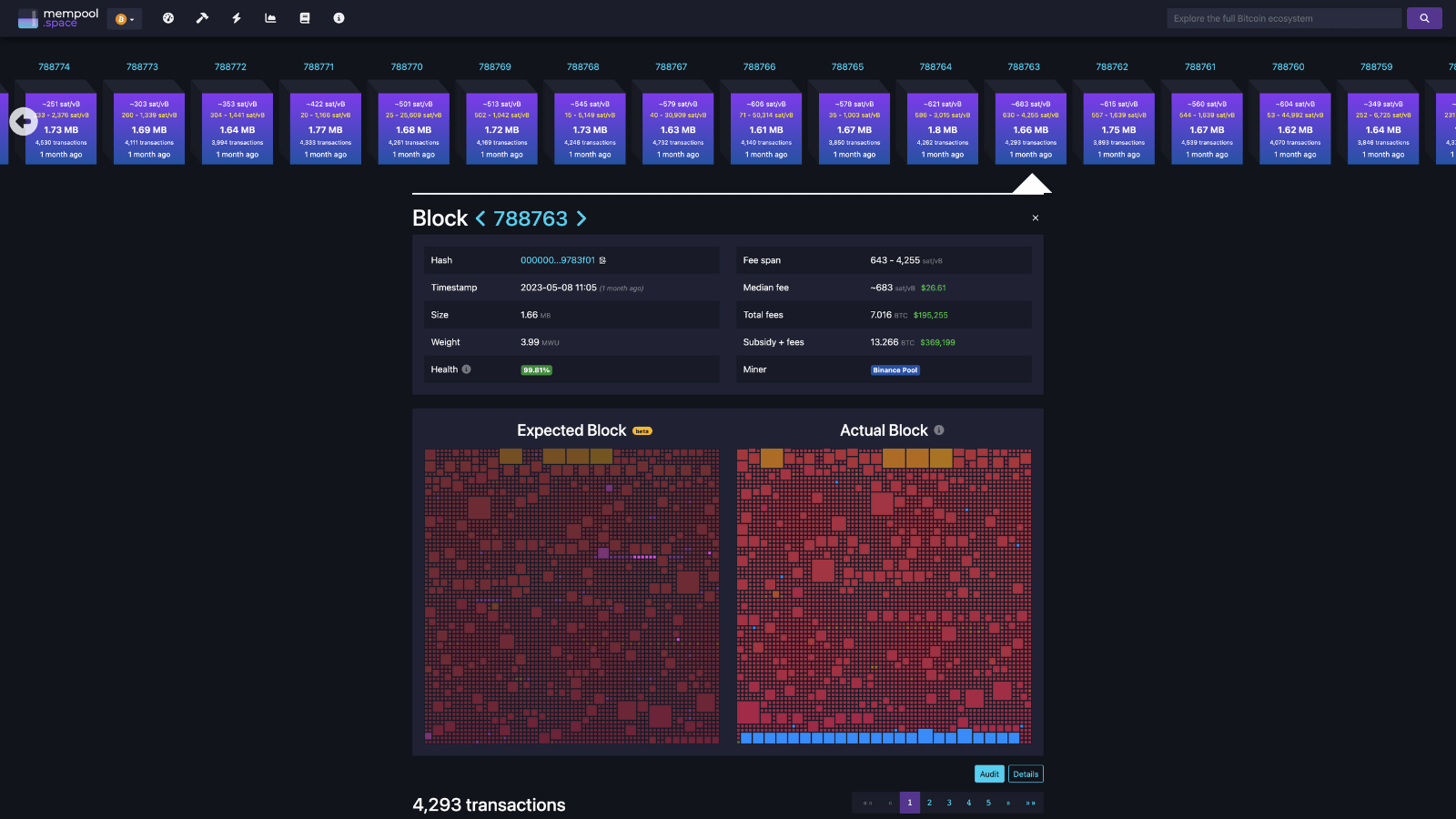
As soon as BRC-20 tokens became available, we saw large volumes of transactions and, consequently, very high transaction fees. At some point, Bitcoin miners were earning more rewards in transaction fees than in newly minted coins.
With this in mind, we should remember that on the Bitcoin blockchain there is a finite number of Bitcoins that can be created—21 million to be exact. The process of mining, or creating new Bitcoins, rewards miners with a certain number of Bitcoins for each new block mined. However, this reward halves approximately every four years in an event known as a "halving", with the next one happening in 2024. Once all 21 million Bitcoins have been mined, miners will only be rewarded with transaction fees.
Moreover, important Layer 2 solutions, such as the Lightning Network, are designed to address the scalability issues of the Bitcoin blockchain. These solutions allow for transactions to occur off the main Bitcoin blockchain, thereby reducing the load on the network and allowing for faster and cheaper transactions. However, this also means that many transactions are not happening on the Bitcoin blockchain itself. As a result, miners are receiving fewer transaction fees, which will become their only source of income once all the Bitcoins have been mined.
Given the incredible growth and adoption of Layer 2 solutions like the Lightning Network, it is expected that off-chain transactions will only increase over the next few years. This could further reduce the earnings from transaction fees for miners, potentially diminishing the security of the Bitcoin network in the long run. Here's where BRC-20 tokens come into play.
Minting and transferring BRC-20 tokens requires a transaction on the Bitcoin blockchain. These transactions are subject to (usually high) transaction fees, which would go to the miners. If the use of BRC-20 tokens becomes widespread, this could result in an increase in the number of transactions on the Bitcoin blockchain, and consequently, higher revenues for miners.
In conclusion, while Layer 2 solutions offer a necessary avenue for scaling the Bitcoin network, they also may pose a future challenge for maintaining the economic incentives for miners. However, innovations like BRC-20 tokens have the potential to attenuate these effects, and present a promising outlook for the future of the Bitcoin blockchain. In the future, we may see a highly secure blockchain with both low-cost and lightning-fast transactions for everyday use, and technologically advanced tokens that also provide incentives to miners and better features on the blockchain.