Lightning Network Explained: A Deep Dive into Bitcoin’s Scalability Solution
There’s no doubt about it. Blockchain has been one of the most captivating technologies in recent decades. However, there are still ways in which this concept can be improved, and brilliant minds are constantly working on this.
Important difficulties that Bitcoin faces include scalability, transaction fees, and time. To solve these pain points, solutions such as the Lighting Network have emerged and significantly improved Bitcoin in numerous aspects.
With the recent all-time high in Bitcoin, interest in cryptocurrencies is again picking up steam. In this article, we’ll explain how the Lighting Network tackles some of the most important flaws of Bitcoin.
What Is the Lightning Network?
Although initially developed for solving Bitcoin’s scalability problems, other blockchains such as Ethereum, found use for the Lightning Network as well. The Lightning Network is a layer 2 protocol.
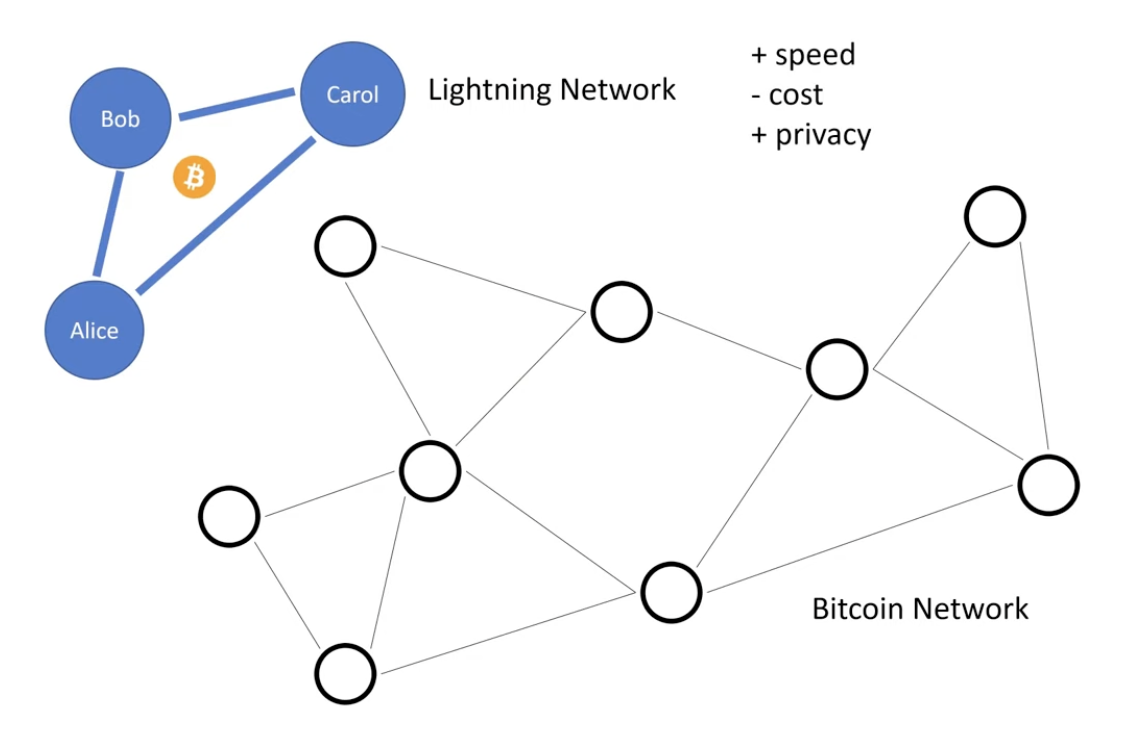
It facilitates transactions by allowing users to make transactions without recording them on the blockchain.
But isn’t this problematic? Well, there are numerous mechanisms that ensure that transactions are transparent and secure.
Because the Lightning Network uses cryptography and smart contracts, off-chain transactions are secure and enforceable on the blockchain. One of the foundations of the Lightning Network is payment channels.
They’re established through a multi-signature wallet and smart contracts. Smart contracts ensure that Bitcoin backs off-chain transactions locked on the blockchain, making fraud within a channel impractical as it would be detected and penalized.
In the realm of Bitcoin, the Lightning Network (LN) has emerged as a game-changing solution to the scalability problem. This “second layer” protocol enables fast, low-cost transactions by creating a network of micropayment channels, allowing for transactions to be conducted off-chain.
This is akin to how OAuth, a protocol in the realm of web authorization, allows for secure, delegated access without sharing sensitive login details. Just as OAuth has revolutionized web security by enabling users to grant applications access to their information on other websites without sharing their passwords, the Lightning Network is revolutionizing Bitcoin by enabling rapid, inexpensive transactions.
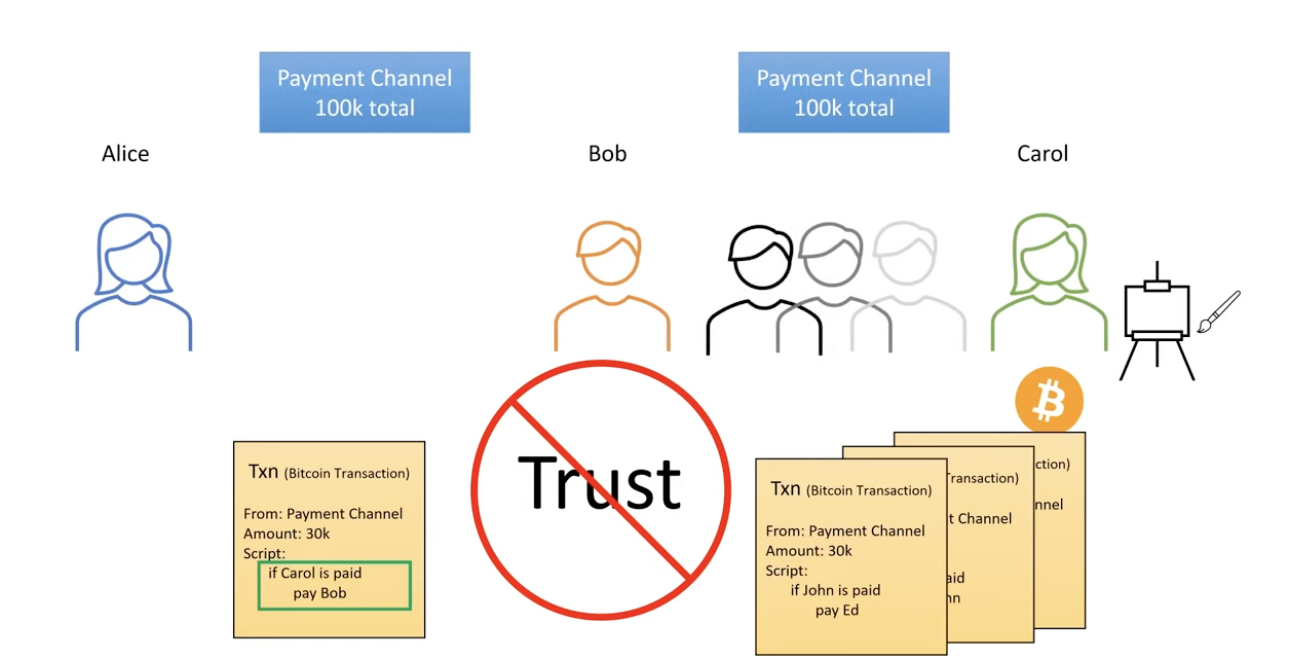
This comparison to OAuth helps to illustrate the Lightning Network’s transformative potential in the Bitcoin ecosystem. As we dive deeper into its workings, we’ll explore how this protocol could shape the future of Bitcoin transactions, much like OAuth has shaped the landscape of secure web authorization.
In short, LN is simply one of the most helpful technologies for fixing Bitcoin’s scalability issues. Because of Bitcoin’s vastness, making changes is incredibly tricky, as there’s a risk of a hard fork, among other problems we highlighted earlier.
Layer 2 solutions separate experimentation from the blockchain, allowing developers who seek to innovate and scale applications efficiently greater autonomy.
Who’s Behind It?
The initial concept of the Lightning Network was proposed by Joseph Poon and Thaddeus Dryja in their 2015 white paper titled “The Bitcoin Lightning Network: Scalable Off-Chain Instant Payments.”
However, it’s worth mentioning that it was developed through the collaborative efforts of numerous individuals and organizations. There are three main implementations of the Lightning Network:
- Lightning Network Daemon (LND)
- C-lightning
- Eclair
Numerous Bitcoin enthusiasts and establishments have already adopted the Lightning Network.
El Salvador has adopted the Lightning Network to streamline the process of adopting Bitcoin as a legal tender. It was also used to fund the presidential campaign of Robert F. Kennedy, making this the first time a presidential campaign was financed with Bitcoin.
Benefits of the Lightning Network
To help you understand why the Lightning Network is so important, let’s explain a couple of the benefits that it brings.
Scalability
Depending on the market, time of the day, and numerous other factors, network speed and transaction fees can significantly vary. Network fees are especially high in the bull market when there’s an increased amount of transactions.
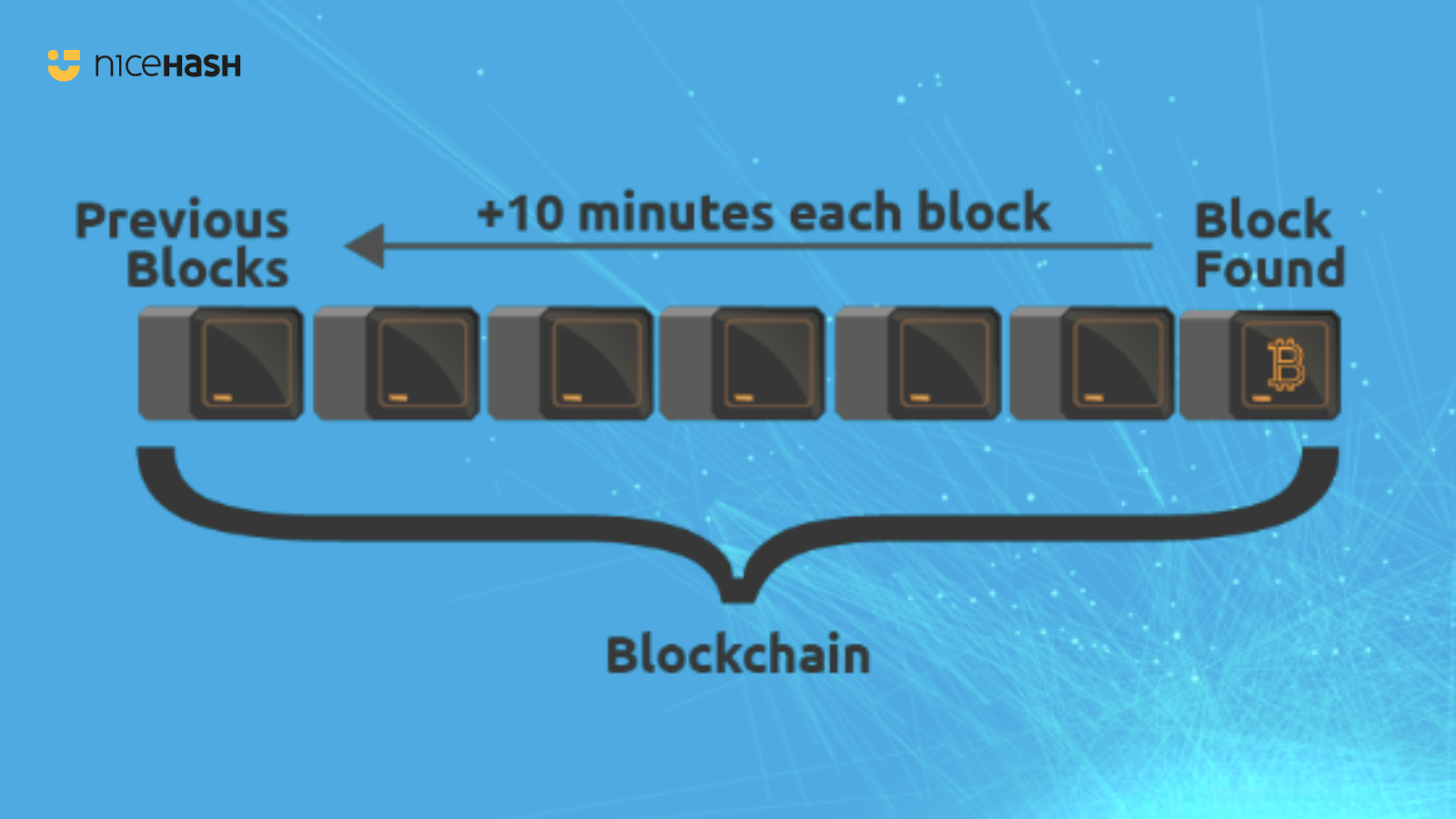
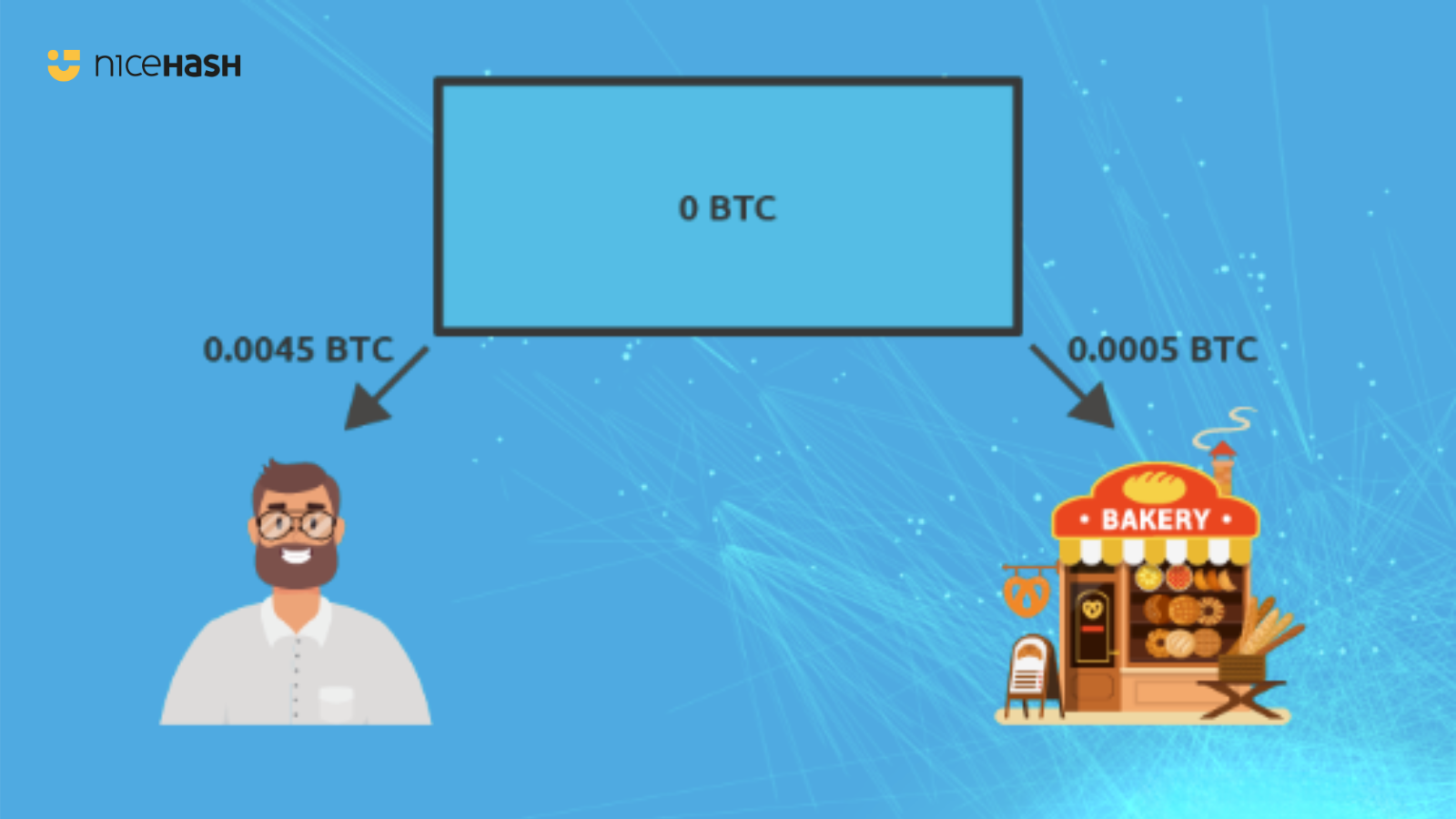
All Bitcoin transactions are accompanied by a fee. However, this fee isn’t tied to the value of the transaction. Rather, the state of the network dictates it. At this moment, this number exceeds $15, but it can vary.
If you’re transferring thousands or hundreds of thousands, then you’ll find this amount negligible. However, the problem occurs in a situation where you’re making numerous smaller transactions.
Let’s say you decide to purchase a video game from a website that supports Bitcoin payments. A $20 or $30 product will be accompanied by a fee that exceeds half of its value.
There are fees for transactions on the Lightning Network as well, but they function differently. A fee is paid both when the channel opens and closes. However, you’re allowed to make as many transactions as you like for free while the channel is open.
With the mass implementation of the Lightning Network, inexpensive transactions would be made in payment channels, while block space would be reserved for larger transactions and changes in the payment channels. This way, transaction speed and fees will be more adequate.
Micropayments
There are limits on the amount of Bitcoin that you can send in a transaction. Nobody benefits from transactions that are worth a couple of cents, which is why they often aren’t supported.
The minimum amount that Bitcoin allows for transfers is around 0.0000054 BTC, but the Lightning Network expands this to 0.00000001 BTC or one Satoshi. Because network congestion can lead to gas fees or longer transaction times, Lightning Networks are much more practical for micropayments.
People didn’t find Bitcoin payments suitable for situations such as PoS transactions, which must be revocable on some occasions. The Lightning Network fixes this problem, bringing cryptocurrencies closer to being used as payments in retail.
Or, as a business, if you decide to hire a contractor from another country, and both parties agree to transact in Bitcoin, the Lightning Network is an efficient solution. It allows for quick, low-fee transactions, making it an attractive option for businesses looking to optimize their operations in the global market.
Keep in mind that the Lightning Network boosts Bitcoin transactions with speed and affordability but can’t directly transfer money between banks. To move funds to a bank, one must convert Bitcoin to fiat on an exchange first.
In contrast, platforms like SoFi offer a streamlined way to transfer money between banks swiftly and economically, highlighting a shift towards more efficient financial transactions despite the need for conversion when dealing with cryptocurrencies.
Privacy
Although this benefit of the Lightning Network isn’t as important as the ones previously mentioned, it’s still worth highlighting. Other people can observe the opening of the transaction on the Lightning Network, yet they won’t have any insight into what is going on if you decide to make it private.
If person A opens a channel with person B and one of them has channels opened with additional people, then they can make transactions between themselves anonymously.
How Does the Lighting Network Work
The Lightning Network allows users to create private payment channels between each other. These channels are established by depositing a certain amount of Bitcoin into a multi-signature wallet, which both parties control.
Once a channel is open, participants can conduct unlimited transactions that are nearly instant and bypass the blockchain, avoiding typical transaction fees and delays. These transactions are recorded only between the involved parties and don’t need to be broadcast to the entire network.
When the parties decide to close the channel, the final state of their transactions is settled on the Bitcoin blockchain in a single transaction. So, instead of having dozens of different transactions, they’re shown as one on the blockchain.
Blockchain and Smart Contract Regulations
As blockchain technology and smart contracts continue to gain traction, governments globally are beginning to establish regulations to oversee their application.
These regulations are designed to mitigate concerns related to security, privacy, and fraud while fostering innovation and growth within the blockchain sector.
In the United States, the regulatory framework for blockchain and smart contracts is intricate and continually evolving. At the federal level, multiple agencies oversee various facets of blockchain technology and cryptocurrencies.
For instance, the Securities and Exchange Commission (SEC) plays a significant role in regulating initial coin offerings (ICOs) and other cryptocurrency ventures, whereas the Commodity Futures Trading Commission (CFTC) governs cryptocurrency derivatives.
State-level legislation has also seen developments related to blockchain and smart contracts. Notably, California has enacted laws recognizing the legal status of smart contracts and allowing for the establishment of blockchain-based LLCs in California.
This progressive stance towards blockchain technology exemplifies how states are adapting to accommodate the digital age’s emerging legal needs, ensuring a supportive environment for technological advancement and legal clarity in the blockchain industry.
Lighting Network Solves Vital Problems That Bitcoin Faces
The Lightning Network is far from the only project aiming to improve Bitcoin. Numerous frameworks have been made for Ethereum and numerous other blockchains. Bitcoin’s scalability problem has been around for a long time, and the Lightning Network is one of the best approaches we have to fixing it.
Of course, no blockchain is without flaws, but with innovative solutions, some of the largest downsides become much less problematic. Whether you’re a crypto investor, a tech enthusiast, or someone managing a crypto project, understanding concepts such as lighting networks can be crucial for your journey.
Hopefully, this article has helped you understand the advantages of the Lighting Network for Bitcoin and gives you the proper knowledge to explore more complex concepts and protocols.