How Will AI Agents Drive Crypto Innovation in 2025
The views and opinions in this article are those of the guest author and do not necessarily represent those of NiceHash.
It has become all too common to associate the crypto space with scams, owing to its decentralized nature and easy replicability that lacks proof-of-work capex. The memecoin mania over the last two years has certainly solidified this perception.
In the meantime, it becomes more difficult to give credit to emerging narratives.
Nonetheless, the credit is due for the conjoining of two buzzwords - blockchain + AI. Namely, AI agents leveraging blockchain networks. We will explore how this trend not only holds a sound foundation for future growth, but the two technologies perfectly complement each other in a meaningful way.
Over the last year, the AI narrative in the crypto space has even outpaced memecoins as the most performant by market cap weight. In fact, according to DeFiLlama’s narrative tracker, AI narrative outperformed Bitcoin itself by 11.7x. But how do AI agents come into play moving into 2025 and beyond?
The Potential of AI Agents
At its core, when we are talking about AI agents, we are talking about virtual assistants. Most people are already familiar with them: Apple’s Siri, Google Assistant, Amazon’s Alexa and Microsoft’s Cortana.
Using natural language, people can task them with information retrieval, managing schedules and to-do lists, make phone calls, read text messages, get directions, find traffic and weather updates, play music, and even control smart home devices. Just by listing these tasks it is easy to see that such virtual assistants are primarily focused on general accessibility.
AI agents go beyond that scope, capable of chaining their decisions in a specific domain once they are committed to a task. Through reinforcement learning via neural networks, they can also read contextual cues from new environments, enabling them to adapt and cumulatively improve their behavior to yield results for specific tasks.
At the AI Forward 2023 conference in San Francisco, Microsoft co-founder Bill Gates likened this potential of AI agents as total intermediaries between users and the digital space.
“There will be one company that creates the personal agent. That's a big thing. Everything will be mediated through your agent.”
Of course, this has massive implications for the financial world. If AI agents can scan real-time market data and make decisions superior to the human average, we are likely to see a world in which AI agents trade against each other.
On a large scale, Amazon’s COSMO (Common Sense Knowledge Generation) is already poised to underpin the company’s e-commerce business model given that “Both offline and online A/B experiments demonstrate our proposed system achieves significant improvement.”
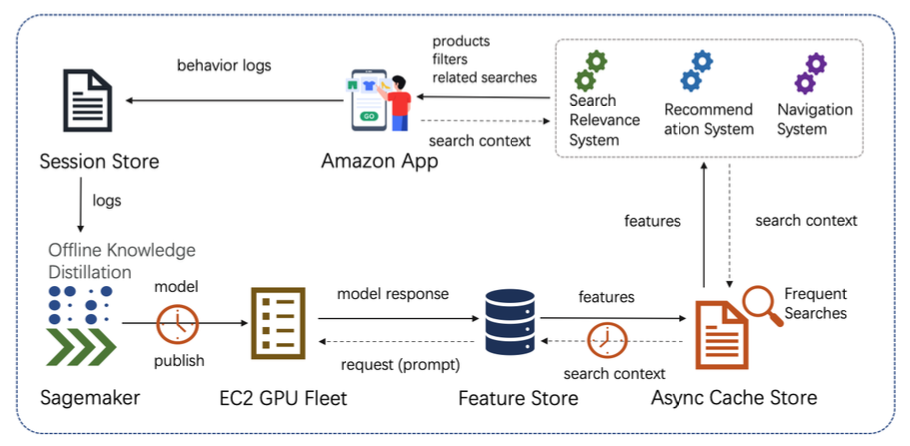
The deployment of COSMO-LM for Amazon’s e-commerce, as it employs a continuous feedback loop to adapt to users’ queries. Image credit: Amazon.com
It is then clear that AI agents are here to stay due to their enormous potential to increase productivity at scale. But the question is, how are they applied in the blockchain space?
First, let’s see how AI agents evolved in the existing decentralized finance (DeFi) ecosystem.
The Evolution of AI Agents
As the precursors to present AI agents in the crypto space, traditional futures trading markets saw popular futures trading algorithms rise to the surface. From arbitrage and mean reversion to momentum and volume-weighted average price (VWAP) algorithms, they share capacity to read real-time market data such as liquidity, volume and price, to identify trading opportunities.
Once such patterns are detected, these algorithms sprung into action within a fixed ruleset. This alone makes them more likely to succeed because it eliminates emotion-based trading. Such trading algorithms also share automation at a super-human speed, which is critical for arbitrage opportunities arising from minuscule asset price differences.
While this may seem as already preferable to human trading, AI agents offer an even greater edge. That’s because traditional algorithms are pre-programmed. Think of it as using AI to write an essay or another piece of text. Agents are based on predefined rules and conditions, which sometimes have a mismatch with reality. After all, the defining feature of intelligence is adaptability.
But AI agents powered by machine learning (ML) continuously create their own behavior based on rewards and penalties in dynamic environments. After a certain threshold, this training process results in novel solutions to tackle goals.
And in the world of volatile markets, goal-oriented AI agents optimize the path to profits just as they can optimize a path to beat human drivers in Trackmania. Blockchain-based AI agents provide an additional layer of flexibility that is lacking in the traditional markets.
Transformative Blockchain-Based AI Agents
There are many reasons why AI agents are better suited for blockchain deployment. First, AI agents inherit the property of blockchain networks as immutable records. Because blockchain data is…chained and verified by multiple nodes, AI agents can rely on data that is less likely to be altered.
This feeds into transparency of AI agents’ decisions, making them verifiable and serving as another data set for AI training.
Moreover, there is cost involved as AI agents interact with various blockchain networks and their tokenized ecosystems through smart contracts. When they are rewarded or penalized via tokens, their behavior can be traced with precision.
In other words, blockchain-based data provides higher quality data for AI training datasets. One that is more consistent and representative of real-world scenarios. And higher quality data yields higher quality AI agents.
Leveraging peer-to-peer (P2P) networks, AI agents are also scalable as they can conduct cross-chain interaction, effectively creating a unified crypto ecosystem. Lastly, cryptography techniques like zero-knowledge proofs (ZKP) could validate an AI agent's trading performance, but without revealing how.
Such capacity will be critical in the world of AI agents trading against each other because they can execute complex trading strategies while keeping the logic and decision-making process private. At the same time, ZKP can also prove compliance with interacting platforms.
On top of that, ZKP can scale the deployment of AI agents because less data is needed to be transmitted and processed. Although ZKPs demand more computing power, ZK-Rollups address this by batching and compressing transaction data. In a paper “Analyzing and Benchmarking ZK-Rollups”, researchers at Imperial College London, Astria and Universitat Oberta de Catalunya, found that different approaches yield different costs.
“For zkSync Era, the data show a median batch size of 3,895 transactions, resulting in a median batch cost of $18.93 and a cost per transaction of approximately $0.0047…In contrast, Polygon ZK-EVMprocesses smaller batches, with a median batch size of 27 transactions. This leads to a median batch cost of $1.38 and a cost per transaction of $0.0511.”
In turn, AI agents would prioritize interacting with zkSync Era for high-volume transactions, such as microtransactions in blockchain gaming, to minimize the cost per transaction. The AI algorithm could also time its transaction-batching operations to leverage zkSync’s larger median batch size.
The cost-consideration dynamic would then further alter the behavior of AI agents, based on blockchain’s performance and real-time costs. Once again, this layer of complexity makes the blockchain space less user-friendly than simply interacting with smartphone apps. But AI agents have the potential to remove that complexity out of site by automation.
Ultimately, this would drastically widen the usability of the crypto space beyond ephemeral memecoins, which would make AI agents the prime value drivers of the crypto space. The current AI agent landscape is already pointing in certain directions.
Current AI Agent Landscape
According to Forbes, across all categories, the AI market cap is presently at $33.84 billion out of a total $3.5 trillion market cap, which includes Bitcoin and stablecoins. This is only 0.9% market share.
The market cap of AI agent-driven projects is even lower than that but these projects stand out from the crowd in their broader applications and implications:
- Virtuals Protocol (VIRTUAL), hosted on Base L2, is for AI agents what Ethereum (ETH) and Solana (SOL) are for general token launches. For instance, ELIZA can serve as a conversational agent for Twitter (X), engaging in posts, retweets, likes, quote tweets, etc.
- As an infrastructural cog, SwarmNode.ai (SNAI) makes it possible to create and launch AI agents without managing servers using Python SDK.
- Alongside Solana (SOL) as the major hub for AI agents, Cardano (ADA) joins with its TALOS agent that can actively trade with its portfolio as it focuses on “fundamentals and on-chain metrics rather than short-term price action.”
- MorphwareAI (XMW) aims to monetize AI training and fine-tuning by coordinating computing resources, which includes both users and data centers. Essentially a marketplace for AI workloads.
- Similar to publicly traded companies like Smartsheet (NYSE: SMAR), LinqAI (LNQ) aims to deploy AI tools to optimize and automate workflows on the blockchain. This could cover not just business workflows but automated payments in BTC via Lightning Network.
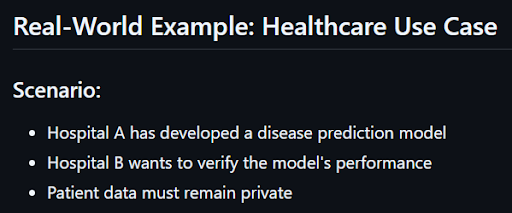
- Hosted on Ethereum, Zero1 Labs (DEAI) aims to scale AI agents with governance, scalability and privacy in mind, using Cypher FHE-EVM Chain. This is similar to the aforementioned example of patient privacy.
- NeuralAI (NEURAL) is perhaps the most promising as it is clear-cut. There is always a need for 3D asset creation, and the platform’s agent churns out 3D models based on text prompts. Equally useful, these assets are importable into various engines like Unreal or Unity.
- Neurobro (BRO) aims to solve the complexity of the crypto space by launching an open-source AI agent (Nevron) that gives crypto traders valuable insight. In turn, the platform returns up to 80% on-chain profits and up to 30% of real-world profits to BRO token holders.
Although memecoins keep siphoning more finite capital, it is clear that future crypto cycles will be AI-narrative driven. As Bill Gates noted, intermediation is the key, and everything falls under that umbrella. Down the line, it wouldn’t be surprising if an AI agent is launched with a specific purpose to rate the performance of AI agents across all categories.
Pioneering the Next Decade
While blockchain represents the next evolution of the internet as its moneyed layer, AI agents represent the final all-purpose tool as layer 3 on top of L2 scalability. What can be conceptualized can be coded, and what is coded can be deployed on blockchain’s smart contracts.
Above traditional algorithms, AI agents evolve their behavior through reinforcement learning via rewards and penalties, making them adaptive and capable of optimizing their performance. In turn, the blockchain space, with its tokenized environment and decentralized nature, facilitates the ideal medium to accelerate that process.
For the end-user, it will then be easy to cut the labyrinthine and daunting landscape of crypto trading, including complex derivatives trading such as futures. Based on user’s proclivities and needs, there may be AI agents specifically made to build a profile, which will then divert users’ assets from a self-custodial wallet to other AI agents, those that other AI agents already rated.
With an AI agent army working in the background, the internet’s layers will grow far more complex. Yet, the end-user will have little need to peer beyond the AI veil.