Hodl or Spend? Bitcoin’s Eternal Debate
Bitcoiners have been split for years. Is this thing digital gold? Or is it peer-to-peer cash? The truth lives somewhere in the middle, tangled up in human nature, freedom, and our own rational self-interest.
Satoshi called Bitcoin a “Peer-to-Peer Electronic Cash System”, but he also saw something else: that as more people used Bitcoin, the value of each coin would rise.
“It’s more typical of a precious metal. Instead of the supply changing to keep the value the same, the supply is predetermined and the value changes. As the number of users grows, the value per coin increases. It has the potential for a positive feedback loop; as users increase, the value goes up, which could attract more users to take advantage of the increasing value.” - Satoshi Nakamoto
It’s fair to call Satoshi a monetary entrepreneur who bootstrapped a free-market monetary system from zero. The rising price pulled people in; the permissionless design kept them there. That feedback loop was intentional.
Yet, one thing that is important to know about Bitcoin is that transaction fees will eventually need to sustain the network once the block subsidy runs out. The system only works if people actually transact. But early on, the psychology shifted the other way. HODLing took root fast. The now infamous 2013 forum post, “I AM HODLING” turned a typo into doctrine.
Some of the greatest Bitcoin evangelists out there like Michael Saylor and Saifedean Ammous have leaned hard into this, pointing to Austrian economics and low time preference. The argument? Why spend the thing that continues to prove itself as one of the greatest stores of value ever when you can spend deflating dollars.
Hal Finney, the first person to ever receive a Bitcoin transaction, even emphasized that Bitcoin’s security depends on price. “For Bitcoin to succeed and become secure, bitcoins must become vastly more expensive,” he wrote. In this view, hodling isn’t just wise, it's protective. The stronger the demand to hold, the higher the price. The higher the price, the more miners are incentivized to secure the network.
It’s true that if no one ever spends, Bitcoin risks becoming a speculative dead end, something that is hoarded, but unused. But the beauty of the system is Bitcoiners can use it as both savings and money. That tension between scarcity and utility is exactly what makes Bitcoin so powerful.
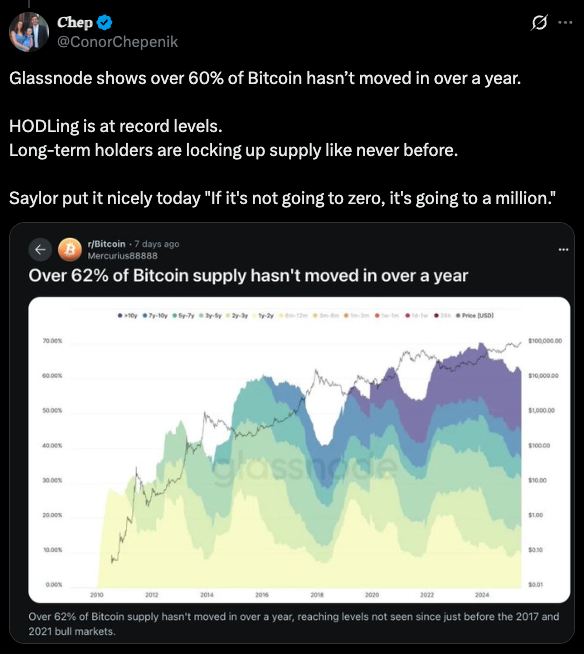
So what does the data say? In 2025 most people are still hodling.
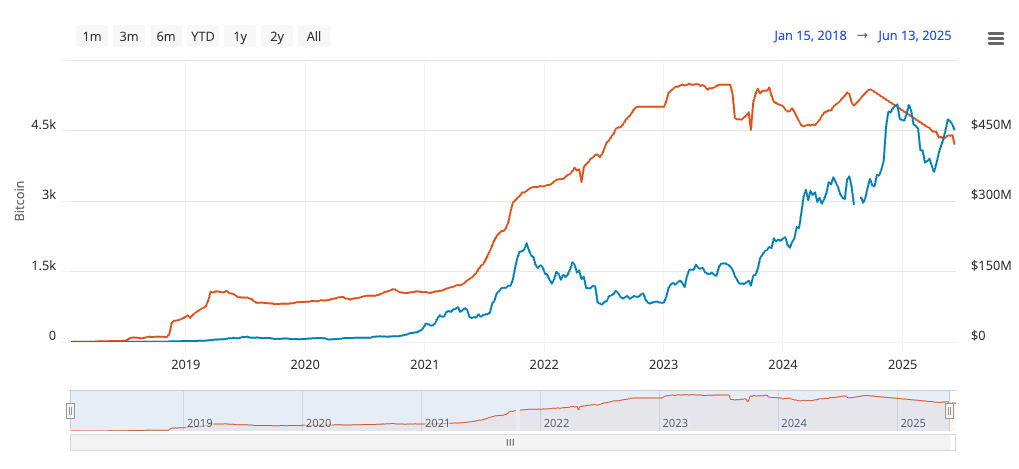
River Financial’s 2023 report found that “89% of consumers do not engage in payments and hold their bitcoin to make a profit.” However, the lightning Network is making it easier than ever for people to spend their bitcoin and for merchants to accept it without having to wait 10+ minutes for a transaction to confirm on-chain. Since 2018, lightning has exploded from under 1,000 BTC in capacity to over 5,300 BTC at its peak by early 2025.
Bad money gets spent. Good money gets saved. That’s Gresham’s Law in action.
And that’s exactly what most Bitcoiners are doing, spending fiat, stacking sats. But hodling is not as easy as it seems. Every Bitcoiner knows the sting of spending too soon. Just ask Laszlo.
In May 2010, he paid 10,000 BTC for two pizzas. Back then? Worth $40. Today? You could buy every pizza joint in town. That’s the ache behind every sat spent, the fear that tomorrow, it’ll be worth ten times more. But here’s what we forget: if no one had spent those early coins, if no one had tested Bitcoin in the real world, it might’ve never reached escape velocity.
No pizza, no proof of concept. No traction. No $100K Bitcoin. Spending gave Bitcoin life. Without real-world use, money’s just an idea. This is because money’s real strength is in circulation.
Look at Bitcoin Beach in El Zonte. People there started earning in sats, spending in sats, pricing in sats. It rewired how a lot of people in El Salvador think about value. It turned Bitcoin from a static investment into a living economy.
The more people hold, the more likely merchants are to accept it. The more merchants accept it, the easier it is to spend. It’s a feedback loop. But someone has to start the loop. That takes courage. The idea of spending bitcoin isn’t dead, it’s just growing where it’s needed most.
There is another cost to spending bitcoin outside of the price action, especially if you value privacy and sovereignty. On-chain transactions can link addresses and reveal more of your stack than you intended. That’s where tools like Coin Control, CoinJoin, and Payjoin come in.
Lightning adds a layer of privacy by default. Payments are routed through ephemeral channels, not etched into a permanent, public ledger. Still, opening channels can leak information, many lightning users rely on third parties, and hot wallets can be a liability.
The safest place is cold storage, but if you ever want to spend, you need to think ahead. Use new addresses. Separate your wallets. Many users rely on cold storage for savings and a hot wallet with much less bitcoin for spending. Bitcoin gives you power. But that power demands responsibility.
The debate isn’t about whether Bitcoin is good. It’s about how best to use that good for your own situation. Is Bitcoin’s value preserved by hoarding, or expressed through exchange? Both sides care. They just express that care differently.
The future is already unfolding: Taproot unlocks better multisig and privacy. BOLT12 and channel splicing make Lightning simpler and more powerful. Sidechains like Fedimint and Liquid could offer fiat-like features on Bitcoin rails.
Stablecoins on Lightning are starting to close the pricing gap. Privacy upgrades like Cross-Input Signature Aggregation are on the horizon, Payjoin is finding its way into more wallets, and chaumian e-cash mints are evolving fast and bringing serious privacy to everyday sats.
Tax reform is coming too, as more politicians become orange-pilled. It’s very possible more countries start exempting small transactions which would unlock more casual spending. In a few years, spending bitcoin might feel as natural as swiping a debit card. Layer 1 for savings. Layer 2 for payments. All in one wallet, with no friction.
So What Should You Do?
Continue learning about Bitcoin and ask yourself the right questions. Are you saving? Spending? Both? Divide your stack. Play around and don’t be afraid to load up a small amount on a lightning wallet so you can try zapping people on Nostr or Stacker News. Learning the tools is the best way to see how powerful Bitcoin is.
Support Bitcoin businesses. Tip creators. Use Lightning. Stay on top of taxes. In the U.S., services like Strike let users put dollars in their account to pay Lightning invoices, sidestepping taxable events.
Earn in BTC if you can. It normalizes spending and offers a great way to get KYC-free sats into your Bitcoin wallet. Lock down your setup. Use biometrics, 2FA, back up your channels, and keep your keys offline. Stay private. New addresses. CoinJoins. Lightning. All of it matters. Most of all, aim for balance. Hodl with conviction and spend with intention.
It’s likely that this debate will never die. Even when the world achieves hyper-bitcoinization, people will still be arguing with others about the best way to use Bitcoin. It’s human nature.
The longer Bitcoin exists, the more it proves itself as sound money. Money that lets you save without gambling your future. The main difference of a Bitcoin standard vs a fiat standard is that under a Bitcoin standard, saving and investing become two separate things again.
Saving means putting your energy into money, a call option on other peoples goods and services in the future. Investing means taking a risk, betting that a business delivers value to the market.
Fiat blurs the line. It forces savers to become gamblers. Bitcoin separates the two. Under fiat, holding dollars guarantees one thing: you lose purchasing power. With Bitcoin, saving works again.
We’re still early and we get to shape what Bitcoin becomes. Some will guard their stack like a dragon guards its jewels, never spending it. Others will prefer to play the role of the blacksmith, shaping their local economy with every sat spent.
Bitcoin won’t make that choice for the end user and that is exactly what makes it so powerful. It’s permissionless. It doesn’t need your ID. It doesn’t care what country you’re in.The protocol won’t print money on you. Bitcoin just reflects back people’s preferences as sound money. Every act of saving or spending helps decide what Bitcoin becomes.
So don’t trust anyone to tell you how you should spend your bitcoin. Verify the tradeoffs for yourself and make a rational decision that is best for your situation.
There’s only one wrong move: ignoring Bitcoin altogether. Hodlers and spenders may argue, but they’ll both end up ahead of the no-coiners.
*Note: This article was written by our partner Bitcoin News as a guest blog. The views and opinions expressed are those of the author and do not necessarily reflect the official position of NiceHash.